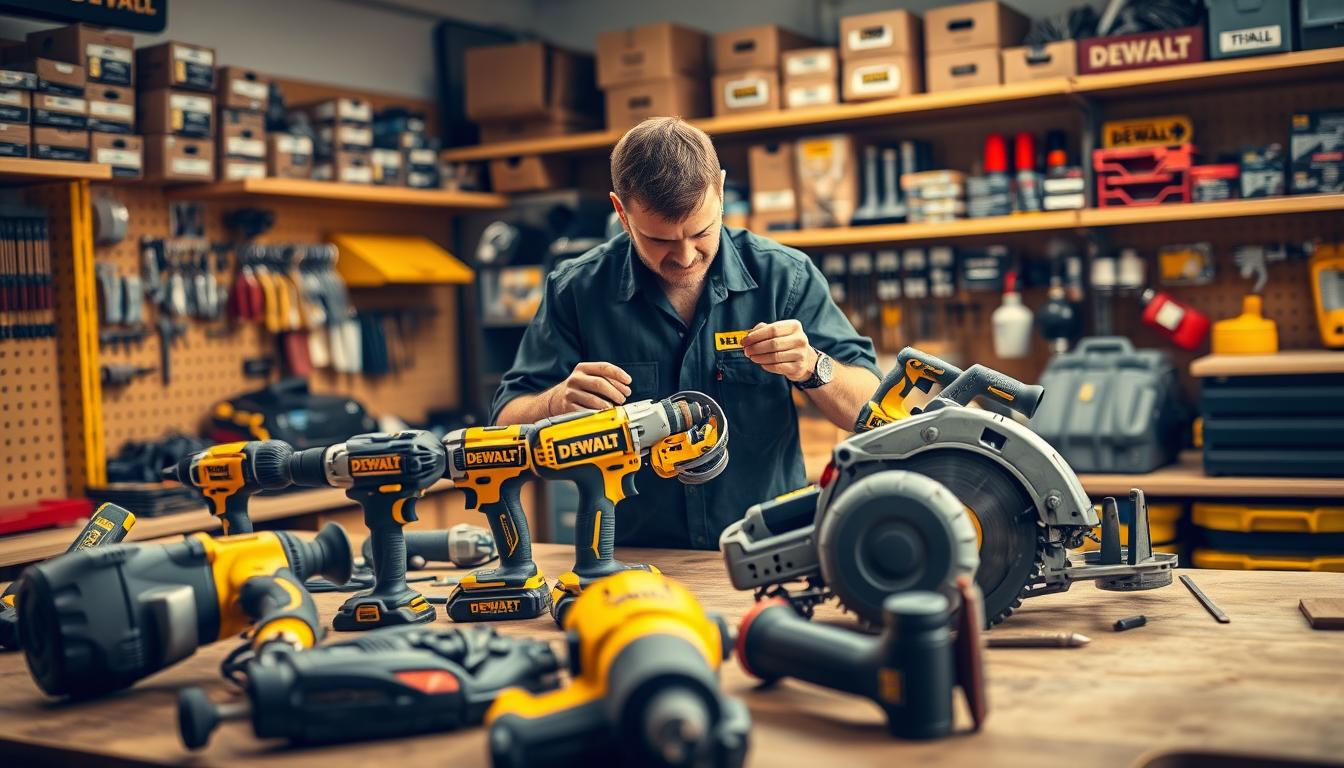
For professionals and DIY enthusiasts alike, DEWALT tools are a staple in many workshops. However, like any equipment, they can suffer from wear and tear, leading to the question: can they be fixed? Understanding the repair options for DEWALT tools is crucial for extending their lifespan and saving on replacement costs.
Repairing DEWALT tools not only reduces electronic waste but also ensures that your equipment is back in working condition quickly. This article will explore the possibilities of repairing DEWALT tools and provide expert tips on how to do it effectively.
Key Takeaways
- Understanding the repairability of DEWALT tools can save you money.
- Repairing tools reduces waste and supports sustainability.
- Expert tips can help you fix common issues with DEWALT tools.
- Knowing when to repair versus replace is crucial.
- DEWALT tool repair service can be a cost-effective solution.
Overview of DEWALT Tools and Their Durability
Understanding the durability and common issues associated with DEWALT tools is crucial for maximizing their lifespan. DEWALT is a well-respected brand in the power tool industry, known for producing high-quality and durable tools.
DEWALT’s Product Line includes a wide range of tools such as drills, saws, sanders, and more, catering to both professionals and DIY enthusiasts. Their tools are designed to withstand rigorous use, but like any machinery, they are not immune to wear and tear.
Understanding DEWALT’s Product Line
DEWALT’s product line is diverse, offering tools that are both powerful and durable. From cordless drills to heavy-duty saws, DEWALT tools are designed to meet the demands of various projects. The cordless technology in many DEWALT tools provides users with the flexibility to work without being tethered to a power source, enhancing productivity on the job site.
Common Issues with DEWALT Tools
Despite their durability, DEWALT tools can experience issues over time. Common problems include worn-out brushes, faulty batteries, and mechanical failures. Regular maintenance is key to preventing these issues and ensuring the longevity of the tools. For instance, keeping tools clean and storing them properly can significantly reduce wear and tear.
Another common issue is the degradation of batteries over time. DEWALT’s cordless tools, while convenient, can suffer from battery fatigue if not properly maintained. Following the manufacturer’s guidelines for charging and storing batteries can help mitigate this problem.
By understanding these common issues and taking proactive steps in DEWALT tool maintenance, users can extend the life of their tools and ensure they continue to perform optimally.
Signs That Your DEWALT Tool Needs Repair
Identifying the need for repair in DEWALT tools is crucial for maintaining their performance and longevity. Ignoring early signs of malfunction can lead to more severe problems, potentially resulting in costly repairs or even the need for replacement.
Strange Noises or Smells
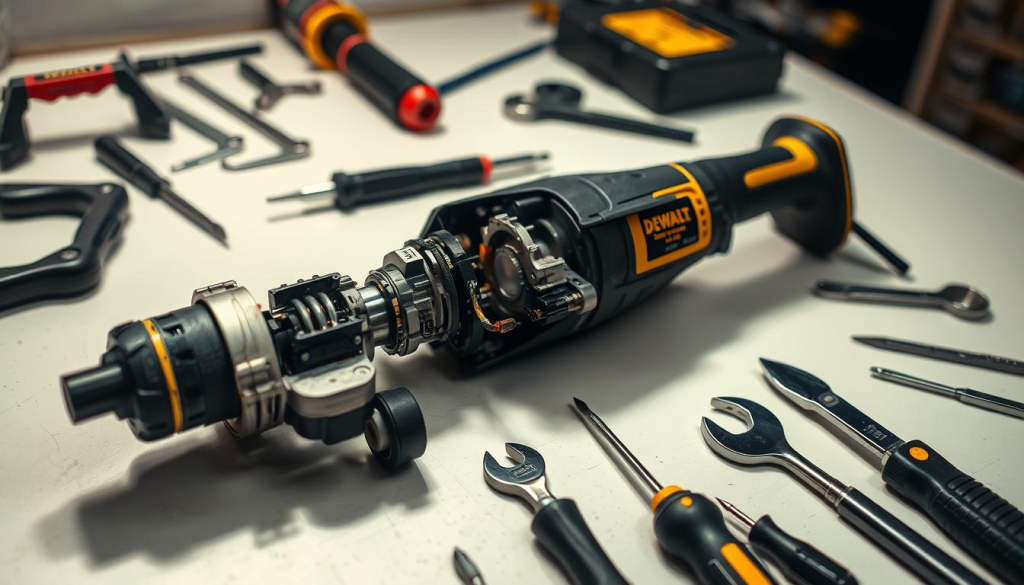
One of the first indicators that your DEWALT tool needs attention is the presence of unusual noises or smells. Grinding, screeching, or rattling sounds can signify worn-out or misaligned parts. Similarly, if your tool emits a burning smell or any unusual odor, it may indicate an electrical issue or overheating.
For instance, a DEWALT circular saw making a loud grinding noise might have a worn-out blade or a faulty motor bearing. Addressing these issues promptly can prevent further damage.
Decreased Performance
A noticeable decrease in your tool’s performance is another sign that it may need repair. This could manifest as reduced power output, slower operation, or an inability to complete tasks as efficiently as before.
A table comparing the performance of a healthy DEWALT tool versus one that needs repair might look like this:
| Performance Metric | Healthy Tool | Tool Needing Repair |
|---|---|---|
| Power Output | Full capacity | Reduced capacity |
| Operation Speed | Normal speed | Slower than usual |
| Task Efficiency | Efficient completion | Difficulty completing tasks |
Physical Damage to the Tool
Visible physical damage is a clear indicator that your DEWALT tool requires repair. This can include cracks in the housing, damaged cords, or broken parts.
“Regular inspection of your tools can help identify potential issues before they become major problems.” – DEWALT Maintenance Guide
For example, a cracked handle on a DEWALT drill can compromise its functionality and safety. Repairing or replacing the damaged part can restore the tool’s usability.
By being aware of these signs and taking prompt action, you can extend the life of your DEWALT tools and ensure they continue to perform optimally.
When to Consider Repairing vs. Replacing
The decision to repair or replace a DEWALT tool hinges on several factors, including cost, frequency of use, and the tool’s importance to your work or projects. As highlighted in a forum discussion, the sudden loss of a repair center can complicate this decision, emphasizing the need for a careful assessment.
Cost Comparison of Repair vs. New Tool
One of the primary considerations is the cost comparison between repairing the existing tool and purchasing a new one. Repair costs can vary significantly depending on the type of repair needed, the cost of replacement parts, and labor costs if the tool is sent to a dewalt repair center.
For instance, replacing a worn-out battery or a faulty motor might be cost-effective, especially if the tool is otherwise in good condition. However, if the repair involves complex components or the tool is outdated, it might be more economical to replace it with a newer model.
“The cost of repair versus replacement is not just about dollars; it’s about the value the tool brings to your work or projects,” said a seasoned professional. This perspective underscores the importance of considering the tool’s role in your workflow.
Frequency of Use and Importance
The frequency of use and the importance of the tool to your work or projects are critical factors in this decision. For professionals who rely heavily on their DEWALT tools, the downtime caused by a malfunctioning tool can be costly. In such cases, repairing the tool quickly might be the priority, even if the repair cost is significant.
- Assess how often you use the tool and the impact of its absence on your work.
- Consider the tool’s age and whether it’s nearing the end of its lifespan.
- Evaluate the availability of replacement parts and the cost of labor for repairs.
For occasional users, however, the decision might lean towards replacement, especially if a newer model offers significant improvements in performance or functionality.
In conclusion, the decision to repair or replace a DEWALT tool should be based on a thorough assessment of costs, the tool’s importance, and its frequency of use. By considering these factors, users can make an informed decision that best suits their needs.
How to Assess the Damage
Assessing damage to your DEWALT tools is a crucial step in determining whether they can be repaired or need to be replaced. This process involves a thorough examination to identify any potential issues that could affect the tool’s performance.
Quick Visual Inspections
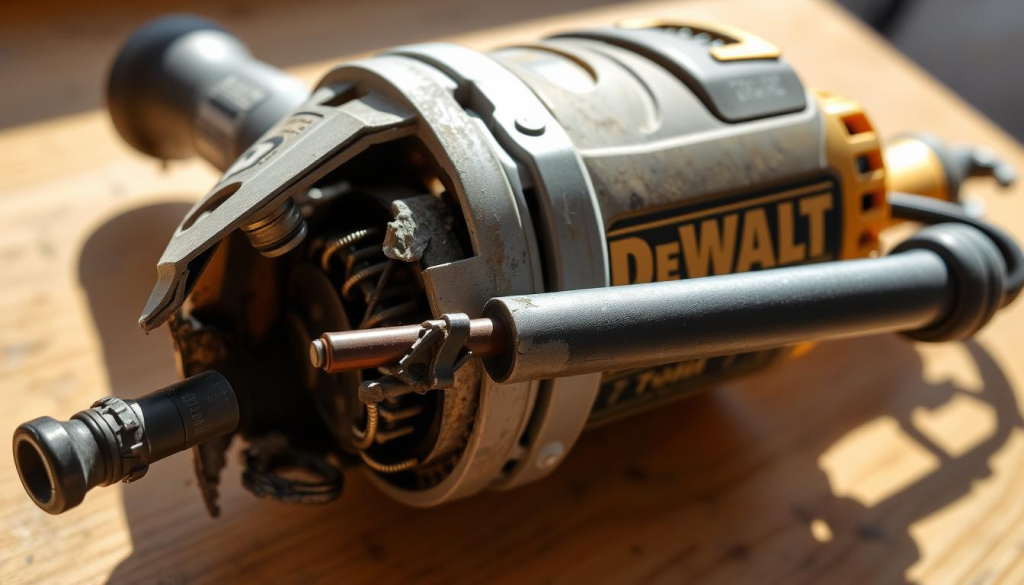
A quick visual inspection is the first step in assessing damage. Look for signs of wear and tear, such as cracks, dents, or rust on the tool’s body and components. Check for any loose or damaged parts that could be causing problems.
Testing Tool Functions
After the visual inspection, test the tool’s functions to identify any issues. Turn it on and check if it’s working as expected. If it’s a power tool, check the battery or cord for any damage and ensure it’s properly connected.
By following these steps, you can effectively assess the damage to your DEWALT tool and determine the best course of action for repair or replacement, ensuring you’re covered under the dewalt tool warranty if applicable.
Basic Repair Techniques for DIY Enthusiasts
Simple repairs can significantly prolong the lifespan of DEWALT tools, and DIY enthusiasts can easily accomplish this with the right guidance. By understanding basic repair techniques, individuals can save money and extend the life of their tools.
Changing Brushes and Other Components
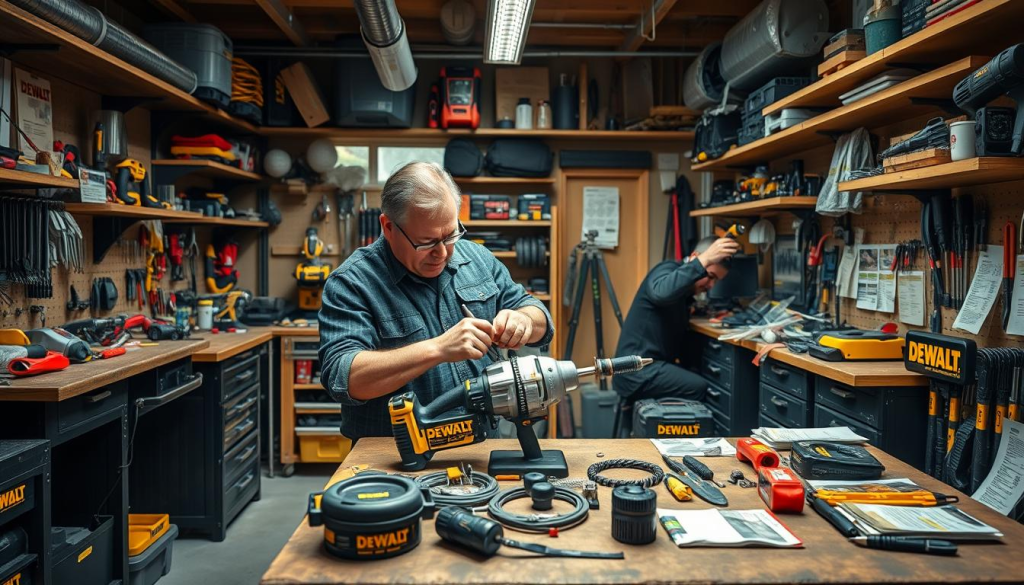
One of the most common repairs for DEWALT tools involves replacing worn-out brushes. Brushes are crucial for the proper functioning of many power tools, as they facilitate the transfer of electrical current to the motor. To replace brushes, first, ensure the tool is unplugged or the battery is removed. Then, locate the brush holders, usually found under a cover or cap on the tool. Gently remove the old brushes and insert new ones, making sure they are properly seated.
Other components that may need replacement include gears, bearings, and switches. When replacing these parts, it’s essential to use original manufacturer’s parts or high-quality equivalents to ensure the tool operates as intended. “The Tool Doctor” uses original manufacturer’s parts for repairs, highlighting the importance of proper repair techniques.
Replacing Fuses and Wiring
Another common issue with DEWALT tools is blown fuses or damaged wiring. To address this, first, identify the source of the problem. Check the tool’s fuse or circuit breaker and replace it if necessary. For damaged wiring, carefully inspect the tool’s cord or internal wiring for signs of wear or damage. When replacing wiring, ensure that the new wiring is of the same gauge and type as the original.
When performing these repairs, it’s crucial to follow proper safety protocols, such as wearing protective gear and ensuring the tool is disconnected from power sources. By doing so, DIY enthusiasts can safely and effectively repair their DEWALT tools, getting back to work quickly.
Professional Repair Options for DEWALT Tools
Professional repair options for DEWALT tools are diverse, ranging from authorized service centers to local repair shops. When your DEWALT equipment fails, choosing the right repair service is crucial to ensure that the job is done correctly and efficiently.
Authorized Repair Centers
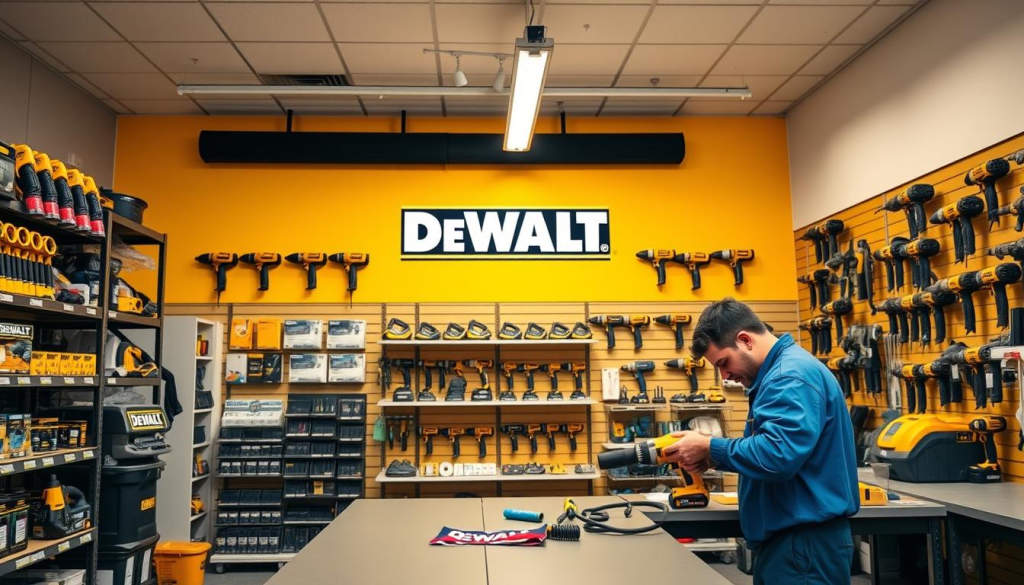
Authorized DEWALT repair centers are facilities approved by the manufacturer to perform repairs. These centers have the necessary training, tools, and genuine parts to restore your DEWALT tools to their original condition.
Benefits of Authorized Repair Centers:
- Genuine DEWALT parts are used
- Technicians are trained by DEWALT
- Warranty repairs are honored
Local Repair Shops vs. Manufacturer Services
While authorized repair centers offer the assurance of manufacturer-backed service, local repair shops can provide more flexible and sometimes more affordable options.
Comparison Table:
| Service Provider | Cost | Warranty | Turnaround Time |
|---|---|---|---|
| Authorized DEWALT Centers | Generally higher | Warranty honored | Varies, often longer |
| Local Repair Shops | Often lower | Shop warranty only | Typically faster |
It’s essential to weigh these factors based on your specific needs and the nature of the repair required for your DEWALT tool.
Warranty and Repair Policies for DEWALT Tools
When it comes to DEWALT tools, knowing what is covered under the warranty and repair policies can save time and money. DEWALT offers a comprehensive warranty program that protects your investment.
Understanding the Warranty Coverage
DEWALT’s warranty coverage is designed to be robust, providing protection against defects in material and workmanship. The standard warranty period varies by product, but most DEWALT tools are covered for at least three years. It’s essential to register your tool on the DEWALT website to activate the warranty.
What’s covered under the warranty? Typically, the warranty includes repairs or replacements for defective parts, ensuring that your tool is restored to its original working condition. However, damages resulting from misuse, normal wear and tear, or accidents are not covered.
Process for Warranty Repairs
If your DEWALT tool is still under warranty and requires repair, the process is relatively straightforward. First, visit the DEWALT website and navigate to their warranty repair page. Here, you’ll need to provide details about your tool and the issue you’re experiencing.
- Locate your tool’s model and serial number.
- Describe the problem in detail.
- Follow the on-screen instructions to initiate the repair process.
In some cases, DEWALT may require you to return the tool to an authorized repair center or to send it in for repair. It’s crucial to follow the instructions provided to ensure that your warranty claim is processed correctly.
Understanding DEWALT’s warranty and repair policies not only helps in maintaining your tools but also ensures that you’re making the most out of your investment. By knowing what is covered and how to initiate a warranty repair, you can minimize downtime and keep your projects on track.
Cost of Repairs: What to Expect
The cost of repairing DEWALT tools can vary significantly based on several factors, including the type of tool, the nature of the problem, and the cost of replacement parts.
When considering repairs, it’s essential to understand that the expenses can range widely. For instance, replacing a worn-out battery or a faulty motor can have different price points. According to DEWALT, “the cost of replacement parts can vary depending on the tool model and the specific component needed.” Regular maintenance, such as cleaning and lubricating tool parts, can help prevent costly repairs down the line.
Typical Price Ranges for Common Repairs
Common repairs for DEWALT tools include replacing brushes, fixing or replacing switches, and repairing or replacing motors. The cost for these repairs can vary:
- Brush replacement: This is one of the more affordable repairs, typically ranging from $10 to $30, depending on the tool model.
- Switch repair or replacement: This can cost between $20 to $50, considering both the part and labor costs.
- Motor repair or replacement: This is usually the most expensive repair, potentially costing anywhere from $50 to $150 or more, depending on the complexity and the tool’s model.
As noted by a professional tool repair service, “the key to cost-effective repairs is early diagnosis and intervention, which can prevent minor issues from becoming major problems.”
Factors Influencing Repair Costs Page
Several factors can influence the cost of repairing DEWALT tools. These include:
- The age and model of the tool: Older models or those that are no longer supported might have higher repair costs due to the difficulty in sourcing parts.
- The nature of the problem: Complex issues that require specialized tools or expertise can increase labor costs.
- The cost of replacement parts: Genuine DEWALT parts can be more expensive than generic alternatives, but they often ensure better performance and durability.
“The decision to repair or replace a DEWALT tool should be based on a thorough assessment of the tool’s condition and the cost implications of the repair,”
advises a DEWALT authorized service center.
Best Practices to Maintain Your DEWALT Tools
DEWALT tool owners can extend the life of their equipment by following simple maintenance practices. Regular upkeep not only ensures optimal performance but also prevents unnecessary repairs. “The Tool Doctor” advises customers on how to increase the longevity of their tool’s performance, indicating the importance of maintenance.
Regular Cleaning and Maintenance
Cleaning your DEWALT tools regularly is vital to their longevity. Dust, debris, and moisture can all negatively impact tool performance. Use a soft brush or cloth to remove dirt and dust from the tool’s exterior and vents.
Key maintenance tasks include:
- Checking and replacing worn or damaged parts
- Lubricating moving parts as recommended by the manufacturer
- Inspecting cords and cables for damage
Proper Storage Techniques
Proper storage is crucial for maintaining your DEWALT tools. Store tools in a dry, cool place, away from direct sunlight and moisture. Use cases or storage boxes to protect tools from dust and physical damage.
| Storage Method | Benefits |
|---|---|
| Using original cases | Protects tools from dust and damage |
| Storing in a dry area | Prevents rust and corrosion |
| Keeping tools away from direct sunlight | Reduces risk of overheating and damage to plastics |
By following these best practices, you can significantly extend the life of your DEWALT tools and ensure they continue to perform optimally.
Resources for DEWALT Tool Owners
Whether you’re a professional or a DIY enthusiast, DEWALT provides various resources to help you keep your tools in top condition. Access to the right information is crucial for troubleshooting, maintenance, and repair.
Online Forums and Community Support
One of the valuable resources available to DEWALT tool owners is the online community. Forums and discussion boards are filled with experienced users and professionals who share their knowledge and solutions to common problems.
- Troubleshooting Guides: Many forums have dedicated sections for troubleshooting guides, where users can find step-by-step instructions for diagnosing and fixing issues.
- User Reviews and Feedback: Reading reviews and feedback from other users can help you identify potential problems and understand how to mitigate them.
- Community Tips and Tricks: Experienced users often share tips and tricks for getting the most out of your DEWALT tools, including maintenance and repair hacks.
Engaging with the community not only helps you find solutions to your problems but also allows you to contribute your own experiences and learn from others.
Official DEWALT Support and Manuals
For more formal support, DEWALT offers official resources that are invaluable for tool owners.
- Official Manuals: DEWALT provides comprehensive manuals for their tools, which include detailed instructions for operation, maintenance, and basic repairs.
- Customer Support: DEWALT’s customer support team is available to answer questions and provide guidance on tool usage and repair.
- Authorized Repair Centers: For more complex repairs, DEWALT’s network of authorized repair centers ensures that your tools are serviced by trained professionals using genuine parts.
By leveraging these resources, DEWALT tool owners can ensure their tools remain in good working condition, minimizing downtime and extending the tool’s lifespan.
Conclusion: Making the Right Repair Decisions
When it comes to DEWALT tools, deciding whether to repair or replace can be a challenging task. Understanding the signs that indicate a need for repair, assessing the damage, and knowing when to seek professional help are crucial steps in making an informed decision.
Balancing Costs and Performance
Repairing DEWALT tools can be a cost-effective solution, especially for high-end or frequently used tools. The cost of repair versus replacement should be weighed against the tool’s performance and expected lifespan. If the repair cost is significantly lower than buying Page new, and the tool is still in good condition, repairing is likely the best choice.
The Value of Repairing DEWALT Tools
DEWALT tool owners can benefit from knowing that their tools can be repaired, extending the tool’s lifespan and reducing electronic waste. Utilizing a DEWALT tool repair service can ensure that the tool is restored to its optimal performance. By considering repair Page options, users can make the most of their investment in DEWALT tools.