
Understanding the power requirements of your DEWALT table saw is crucial for safe and efficient operation. Woodworkers need to know the amp requirements to ensure they’re using the right electrical setup.
A DEWALT table saw is a significant investment for any woodworker, and knowing its amp requirements can help prevent electrical issues and optimize performance. This article will explore the amp requirements for DEWALT table saws and provide valuable insights for woodworkers.
Key Takeaways
- Understanding amp requirements for safe operation
- Optimizing performance with the right electrical setup
- Preventing electrical issues with DEWALT table saws
- Insights into DEWALT table saw amp requirements
- Best practices for woodworkers using DEWALT table saws
Understanding Amperage and Its Importance in Table Saws
To get the most out of your DEWALT table saw, it’s essential to grasp the concept of amperage and its impact on the tool’s operation. Amperage, or amps, is a measure of the electrical current drawn by a tool.
What is Amperage?
Amperage refers to the amount of electrical current flowing through a circuit. In the context of a table saw, it’s a critical factor that determines the power available for cutting. A higher amperage typically means more power, enabling the saw to handle tougher tasks.
Key aspects of amperage include:
- The amount of electrical current drawn by the tool
- The impact on the tool’s performance and efficiency
- The requirement for a robust electrical circuit to support higher amperage
Why Does Amperage Matter?
The amperage of your DEWALT table saw directly affects its performance. A saw with sufficient amperage can handle demanding tasks with ease, while a saw with inadequate amperage may struggle or overheat. Understanding the amperage requirements helps in:
- Selecting the right power source for your workshop
- Ensuring the electrical circuit can support the saw’s amperage
- Optimizing the saw’s performance for various tasks
By understanding amperage and its importance, you can make informed decisions about your DEWALT table saw’s operation and maintenance, ensuring it runs efficiently and safely.
Overview of DEWALT Table Saw Models
DEWALT’s table saw portfolio is extensive, featuring models that are tailored to different applications and user requirements. Understanding the various models and their power specifications is crucial for selecting the right table saw for your needs.
Popular DEWALT Table Saw Models
DEWALT offers several popular table saw models, including:
- DWE7491RS: A contractor-grade table saw known for its portability and accuracy.
- DWE7480: A compact table saw ideal for smaller workshops or job sites.
- DWE7490X: A high-performance table saw with advanced features like rack-and-pinion fence adjustments.
Power Specifications of Each Model
The power specifications of DEWALT table saws vary by model. For instance:
- The DWE7491RS operates at 15 amps, providing sufficient power for most woodworking tasks.
- The DWE7480 also operates at 15 amps, making it suitable for a wide range of applications.
- The DWE7490X is designed for heavy-duty use, also operating at 15 amps but with enhanced performance features.
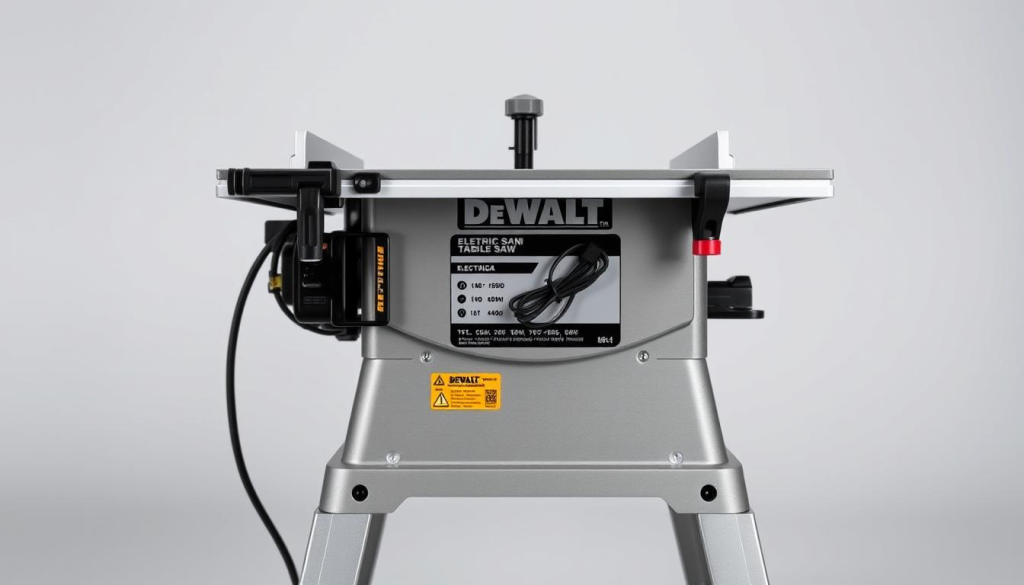
When choosing a DEWALT table saw, it’s essential to consider the specific power requirements of your projects and ensure that your electrical setup can support the saw’s amp requirements.
Amp Rating: What Do DEWALT Table Saws Use?
Understanding the amp rating of your DEWALT table saw is crucial for safe and effective operation. The amp rating is a measure of the saw’s power consumption, and it varies across different DEWALT models.
General Amp Requirements
DEWALT table saws are designed to operate within specific amp ranges. Generally, these saws require between 15 to 20 amps to function efficiently. However, the exact amp requirement depends on the model and its power specifications.
For instance, some DEWALT table saws are designed for heavy-duty applications and may require a 20-amp circuit, while others might operate effectively on a standard 15-amp circuit. It’s essential to consult the user manual or manufacturer’s specifications to determine the exact amp requirements for your DEWALT table saw.
Specific Model Comparisons
Different DEWALT table saw models have varying amp ratings. Here’s a comparison of some popular models:
| Model | Amp Rating | Power Consumption |
|---|---|---|
| DEWALT DWE7491RS | 15 amps | 1800 watts |
| DEWALT DWE7480 | 15 amps | 1850 watts |
| DEWALT DWE7492 | 20 amps | 2400 watts |
As shown in the table, the DEWALT DWE7492 requires a higher amp rating and consumes more power compared to the DWE7491RS and DWE7480 models. This information is critical when planning your workshop’s electrical setup.
When choosing a DEWALT table saw, consider your specific needs and the electrical infrastructure of your workshop. Ensure that your circuit can handle the saw’s amp requirements to avoid overloading and potential electrical hazards.
Choosing the Right Power Source for Your Table Saw
Understanding the power requirements of your DEWALT table saw is vital for choosing the correct power source. A suitable power source ensures that your table saw operates efficiently and safely, reducing the risk of electrical issues.
Understanding Circuit Requirements
The circuit requirements for your DEWALT table saw are determined by its amp rating. Most DEWALT table saws require a dedicated 20-amp circuit. It’s essential to check the specifications of your particular model to confirm its requirements. As DEWALT recommends, using a dedicated circuit helps prevent overloading and reduces the risk of electrical fires.
To determine if your workshop’s electrical system can support your table saw, consider the following:
- Check the amp rating of your table saw and compare it with the capacity of your circuit.
- Ensure that your electrical panel can handle the load without overloading.
- Consult an electrician if you’re unsure about your workshop’s electrical capacity.
“A dedicated 20-amp circuit is ideal for most table saws,” according to electrical safety guidelines. This ensures that your table saw receives the power it needs without compromising safety.
Using Extension Cords Safely
When using an extension cord with your DEWALT table saw, it’s crucial to choose a cord that is rated for the saw’s amp requirements. Using an undersized extension cord can lead to voltage drops, overheating, and potentially cause a fire.
Here are some tips for using extension cords safely:
- Select an extension cord with a gauge rating that matches or exceeds your table saw’s amp requirements.
- Keep the extension cord as short as possible to minimize voltage drop.
- Avoid daisy-chaining extension cords, as this can increase the risk of electrical issues.
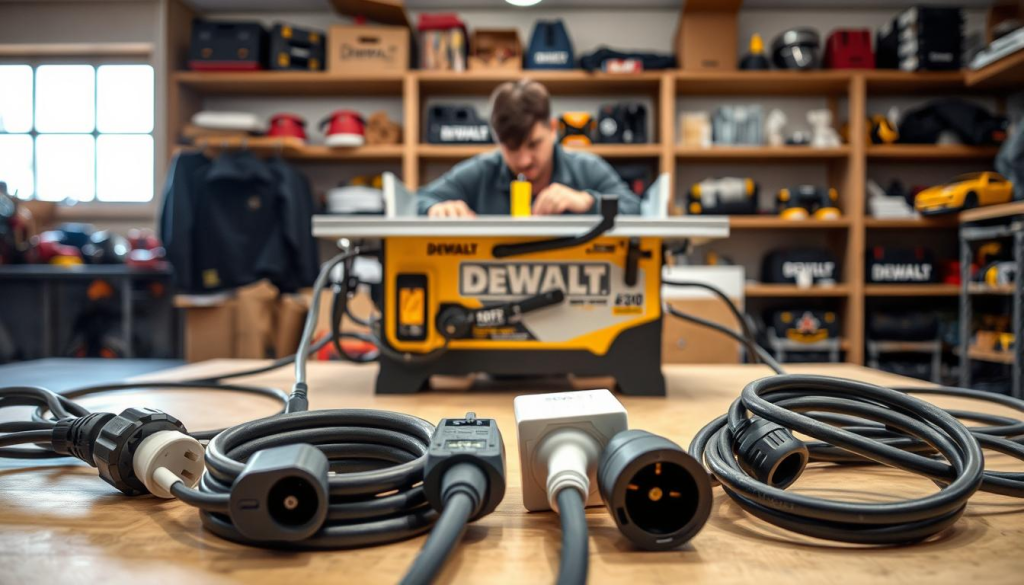
By understanding your table saw’s circuit requirements and using extension cords safely, you can ensure a safe and efficient working environment. As DEWALT emphasizes, safety should always be the top priority when working with power tools.
How to Calculate Power Needs for Your Workshop
Understanding your workshop’s total power requirements is essential for efficient operation and safety. This involves assessing the amperage requirements of all your tools, including your DEWALT table saw.
Assessing Total Amperage for Multiple Tools
To assess the total amperage for multiple tools, you need to know the amperage rating of each tool. This information is usually found on the tool’s specification plate or in the user manual. For example, your DEWALT table saw might have an amperage rating of 15 amps.
List the amperage ratings of your tools and add them up to find the total amperage. For instance, if you have a DEWALT table saw (15 amps), a drill press (10 amps), and a band saw (12 amps), your total amperage would be 37 amps.
| Tool | Amperage Rating |
|---|---|
| DEWALT Table Saw | 15 amps |
| Drill Press | 10 amps |
| Band Saw | 12 amps |
| Total Amperage | 37 amps |
Planning for Efficient Electrical Usage
Once you know your total amperage, you can plan for efficient electrical usage. This might involve upgrading your electrical panel or distributing your tools across different circuits to avoid overloading.
It’s also important to consider the voltage requirements of your tools and ensure that your workshop’s electrical system can meet these needs. Using GFCI outlets can also enhance safety by protecting against ground faults.

Common Electrical Issues with Table Saws
Electrical issues can significantly impact the functionality and safety of your table saw. When operating a DEWALT table saw, it’s essential to be aware of potential electrical problems to ensure optimal performance and prevent accidents.
Overloading Circuits
Overloading circuits is a common issue that occurs when the electrical circuit is subjected to a higher current than it is designed to handle. This can happen when multiple high-power tools are used simultaneously on the same circuit. DEWALT table saws require a significant amount of power, and using them with other power-hungry tools on the same circuit can lead to overloading.
To avoid overloading, it’s crucial to understand the amperage requirements of your DEWALT table saw and other tools in your workshop. Check the electrical specifications of your table saw and ensure that your workshop’s electrical system can handle the total amperage drawn by all tools in use.
Voltage Drops
Voltage drops occur when there is a reduction in voltage in the electrical circuit, often due to resistance in the wiring or other components. This can result in reduced performance of your table saw, as it may not receive the required voltage to operate efficiently.
Using extension cords that are too long or too thin can exacerbate voltage drops. It’s recommended to use high-quality extension cords that are suitable for the amperage and voltage requirements of your DEWALT table saw. Regularly inspect your electrical setup to minimize the risk of voltage drops.
Understanding these common electrical issues can help you troubleshoot problems with your DEWALT table saw and ensure safe and efficient operation.
Safety Considerations When Using Table Saws
To avoid electrical shocks and ensure safe operation, it’s essential to consider safety guidelines for table saws. Using a DEWALT table saw requires attention to several safety factors, particularly those related to electrical safety.
Ensuring Proper Wiring
Proper wiring is critical for the safe operation of your table saw. This includes ensuring that your workshop’s electrical circuit can handle the amp requirements of your DEWALT table saw. A dedicated circuit for your table saw can help prevent overloading and reduce the risk of electrical fires.
- Check your table saw’s manual for specific amp requirements.
- Ensure your workshop’s wiring complies with local electrical codes.
- Consider hiring a licensed electrician to inspect your wiring if you’re unsure.
Using GFCI Outlets
Ground Fault Circuit Interrupter (GFCI) outlets are an essential safety feature for protecting against electrical shocks. GFCI outlets can detect imbalances in the circuit and interrupt the power supply to prevent shocks.
Benefits of GFCI Outlets:
- They provide an additional layer of protection against electrical shocks.
- They can help prevent electrical fires by interrupting the circuit when a fault is detected.
- They are required by electrical codes in many areas for outdoor or workshop outlets.

By ensuring proper wiring and using GFCI outlets, you can significantly enhance the safety of your workshop when operating a DEWALT table saw. Always follow the manufacturer’s guidelines and local electrical codes to ensure you’re meeting the necessary safety standards.
Maintenance Tips for DEWALT Table Saws
To ensure your DEWALT table saw operates efficiently, regular maintenance checks are essential. Proper maintenance not only prolongs the lifespan of your table saw but also ensures it continues to operate safely and effectively. Regular checks help in identifying potential issues before they become major problems.
Regular Inspection of Electrical Components
Inspecting the electrical components of your DEWALT table saw is a critical maintenance task. This includes checking the power cord for any signs of damage, such as cuts, frays, or burn marks. Ensure that all connections are secure and not loose, as loose connections can lead to electrical issues or even a short circuit. It’s also important to check the circuit breaker and ensure it’s functioning correctly.
Additionally, the motor and other electrical components should be inspected for dust and debris buildup. Cleaning these components can prevent overheating and improve the overall performance of the table saw. Use compressed air or a soft brush to gently remove dust, taking care not to damage any sensitive parts.
Keeping Amperage Within Safe Range
Managing the amperage of your DEWALT table saw is vital for its safe operation. Overloading the circuit can lead to serious electrical issues, including tripped circuit breakers or even a fire. Ensure that you’re using the correct amp rating for your table saw, as specified in the user manual. It’s also crucial to monitor the amperage when using the table saw, especially during prolonged or heavy-duty operations.
To keep amperage within a safe range, avoid overloading the circuit with too many tools or appliances. If you’re using an extension cord, ensure it’s rated for the amperage requirements of your table saw. Regularly check the cord for any signs of wear and tear, and replace it if necessary. By maintaining the correct amperage, you can prevent electrical issues and ensure the longevity of your DEWALT table saw.
Conclusion: Powering Your DEWALT Table Saw Safely
Powering your DEWALT table saw safely involves understanding its amp requirements and following safety guidelines. By grasping the importance of amperage and how it affects your table saw’s performance, you can ensure a safe and efficient working experience.
Key Takeaways
Understanding the amp requirements of your DEWALT table saw is crucial. Different models have varying amp needs, and using the correct power source is essential. To determine how many amps your DEWALT table saw needs, refer to the user manual or manufacturer’s specifications.
Next Steps for Users
To continue using your DEWALT table saw safely, regularly inspect the electrical components and keep the amperage within the safe range. Ensure proper wiring and consider using GFCI outlets to prevent electrical shock. By following these guidelines and understanding DEWALT table saw amperage, you can maintain a safe working environment and optimize your table saw’s performance.