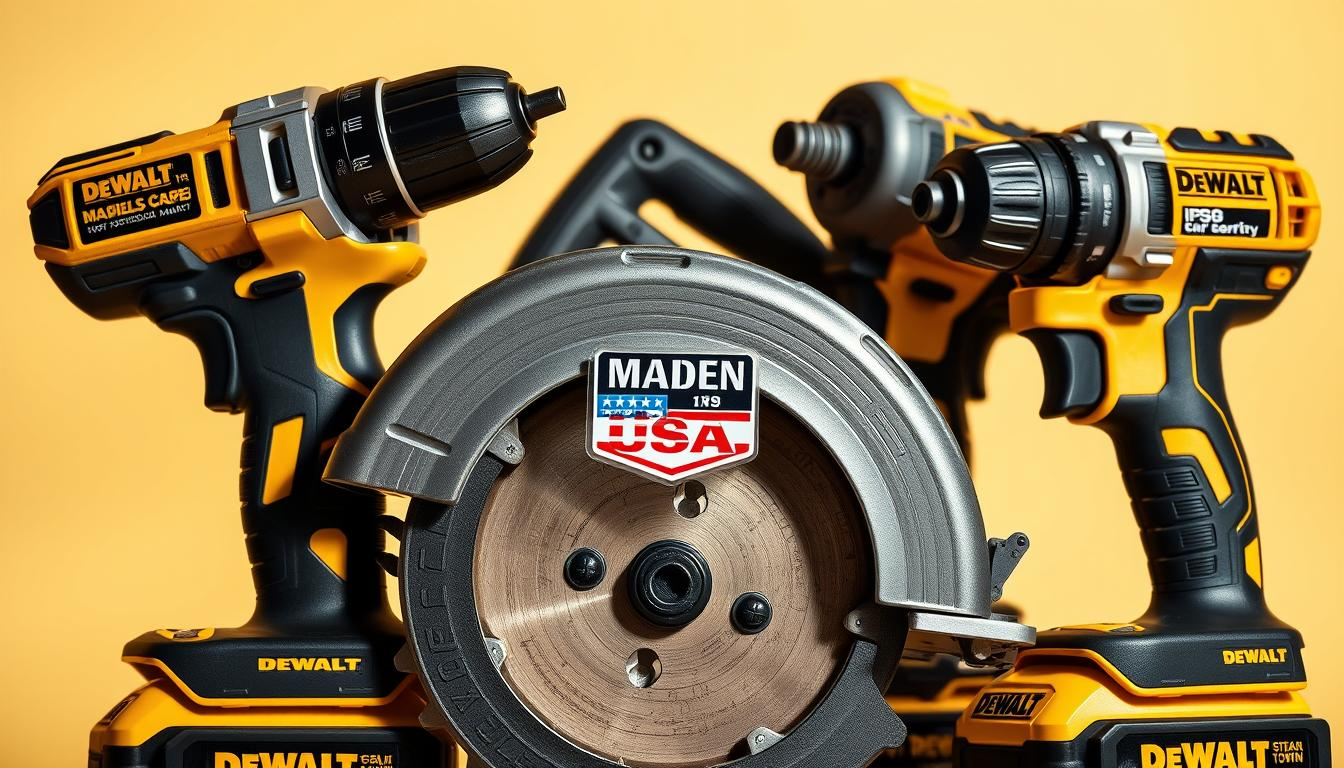
DEWALT power tools have a rich history that dates back to 1924 when Raymond E. DeWalt founded the company. The brand has become synonymous with high-quality power tools and is known for its durability and performance.
Today, DEWALT is a leading manufacturer of power tools, and its products are used by professionals and DIY enthusiasts alike. DEWALT power tools are proudly manufactured in the USA, delivering reliable performance for your toughest projects.
Key Takeaways
- DEWALT was founded in 1924 by Raymond E. DeWalt.
- The brand is known for its high-quality and durable power tools.
- DEWALT power tools are manufactured in the USA.
- The company is a leading manufacturer of power tools used by professionals and DIY enthusiasts.
- DEWALT tools are designed to deliver reliable performance.
A Brief History of DEWALT Power Tools
Raymond E. DeWalt’s invention of the radial arm saw in 1924 marked the beginning of DEWALT’s journey. The company was initially based in Leola, Pennsylvania, and quickly gained a reputation for producing high-quality woodworking machinery.
Founding and Early Innovations
DEWALT was founded on the principles of innovation and quality. The radial arm saw, invented by Raymond E. DeWalt, revolutionized the woodworking industry by providing a versatile and efficient tool for various cutting tasks. This invention not only established DEWALT as a significant player in the industry but also laid the foundation for future innovations.
Expansion into the Power Tool Market
As the years progressed, DEWALT expanded its product line to cater to a broader audience. The company began manufacturing a range of power tools that were designed to meet the needs of both professionals and DIY enthusiasts. This strategic expansion helped DEWALT become a leading brand in the power tool market.
The growth of DEWALT was not limited to its product offerings; the company also focused on enhancing its manufacturing capabilities. By investing in advanced technology and manufacturing processes, DEWALT was able to improve the quality and reliability of its tools.
| Year | Milestone |
|---|---|
| 1924 | DEWALT founded by Raymond E. DeWalt |
| Early Years | Production of radial arm saws and other woodworking machinery |
| Late 20th Century | Expansion into the global power tool market |
Today, DEWALT is recognized for its commitment to quality and innovation. The company’s power tools are manufactured in various locations around the world, including the United States and other countries with advanced manufacturing capabilities. Understanding the DEWALT power tools manufacturing location and DEWALT power tools production country is essential for appreciating the brand’s global footprint and manufacturing strategy.
Where Are DEWALT Tools Manufactured?
DEWALT has established a global footprint, with manufacturing plants in numerous countries. This strategic presence allows the brand to cater to a wide range of customers across different regions effectively.
The global manufacturing strategy of DEWALT is a testament to its commitment to meeting the diverse needs of its customer base. By having production facilities in various parts of the world, DEWALT can respond quickly to local market demands and maintain high standards of quality.
Locations of DEWALT Manufacturing Plants
DEWALT tools are manufactured in several countries, including the United States, Brazil, China, and the Czech Republic. Each of these locations plays a crucial role in the production of DEWALT’s extensive range of power tools.
- The United States is significant for DEWALT, given its heritage and the importance of the North American market.
- Brazil serves as a key location for DEWALT in South America, enabling the brand to serve the regional market effectively.
- China is another vital manufacturing hub for DEWALT, leveraging the country’s advanced manufacturing capabilities and extensive supply chain networks.
- The Czech Republic represents DEWALT’s presence in Europe, allowing for the production of high-quality tools tailored to the European market.
Global Production Strategy
DEWALT’s global production strategy is designed to optimize efficiency, quality, and customer satisfaction. By distributing manufacturing across different countries, DEWALT can mitigate risks associated with supply chain disruptions and fluctuations in local market demands.
| Country | Significance | Products Manufactured |
|---|---|---|
| United States | Heritage and North American market | High-end power tools, cordless tools |
| Brazil | South American market | Drills, saws, and other hand tools |
| China | Advanced manufacturing capabilities | Wide range of power tools, including cordless and corded tools |
| Czech Republic | European market presence | High-quality power tools, specialized equipment |
By maintaining a diverse and global manufacturing footprint, DEWALT is well-positioned to continue delivering high-quality power tools to its customers worldwide.
DEWALT’s Commitment to Quality
The commitment to quality at DEWALT is evident in every stage of their manufacturing process. DEWALT’s dedication to producing high-quality power tools is reflected in the materials they choose and the manufacturing standards they adhere to.
Materials and Manufacturing Standards
DEWALT selects materials that are durable and capable of withstanding the rigors of heavy use. The brand’s manufacturing standards are stringent, ensuring that every tool that leaves the dewalt tools manufacturing plant meets the high expectations of professionals and DIY enthusiasts alike.
The use of high-quality materials is crucial in the production of DEWALT tools. For instance, the brand employs high-grade steel for tool bodies and other critical components to ensure durability and resistance to wear.
| Material | Application | Benefit |
|---|---|---|
| High-Grade Steel | Tool Bodies and Critical Components | Durability and Resistance to Wear |
| Advanced Plastics | Handles and Housings | Lightweight and Ergonomic Design |
| High-Quality Electronics | Motors and Controls | Efficient Performance and Reliability |
Quality Control Processes
DEWALT implements rigorous quality control processes to ensure that every tool meets the brand’s high standards. From the initial design phase through to the final product testing, DEWALT’s quality control measures are designed to identify and address any potential issues.
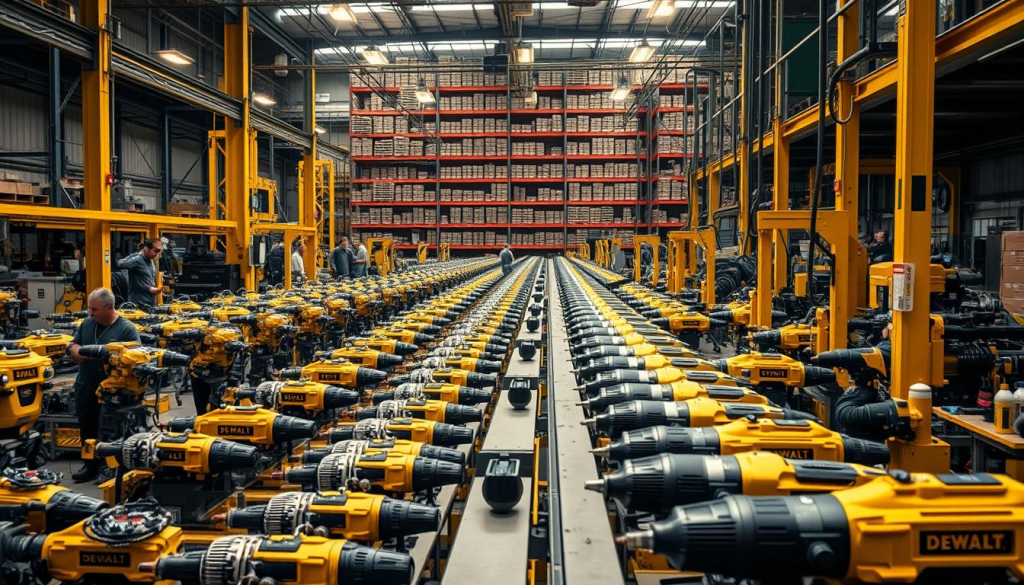
The brand’s quality control processes include thorough inspections and performance testing. DEWALT’s commitment to quality is further demonstrated by its adherence to industry standards and certifications, providing customers with confidence in the tools they purchase.
The Role of Manufacturing Technology
Advanced manufacturing technology plays a crucial role in DEWALT’s production excellence. DEWALT has invested heavily in modern manufacturing technologies, including robotics and automation, to enhance the quality and efficiency of its production processes.
Advanced Robotics in Production
The incorporation of advanced robotics has been a significant factor in DEWALT’s manufacturing advancements. Robotics has enabled DEWALT to:
- Streamline production processes
- Improve product consistency
- Reduce the risk of human error
DEWALT’s use of robotics in production has allowed for more efficient assembly of power tools, directly impacting the dewalt power tools assembly location by making it a hub of technological innovation.
Impact of Automation on Quality
Automation has had a profound impact on the quality of DEWALT’s products. By automating various stages of production, DEWALT has been able to:
- Enhance precision in manufacturing
- Increase production speed without compromising quality
- Implement rigorous quality control measures
The result is a consistent output of high-quality power tools that meet the stringent standards expected by professionals and DIYers alike. DEWALT’s commitment to automation underscores its dedication to delivering superior products.
How DEWALT Supports Local Economies
As a leading brand in the power tool industry, DEWALT’s manufacturing activities play a crucial role in supporting local economies. The presence of DEWALT’s manufacturing facilities in various regions around the world has a multifaceted impact on the local communities.
Job Creation in Manufacturing Regions
DEWALT’s manufacturing operations are significant sources of employment in the regions where they are located. By creating jobs, DEWALT contributes to the economic stability of local communities. The brand’s commitment to maintaining a skilled workforce is evident in its:
- Investment in employee training programs
- Creation of both direct and indirect job opportunities
- Support for local economic development initiatives
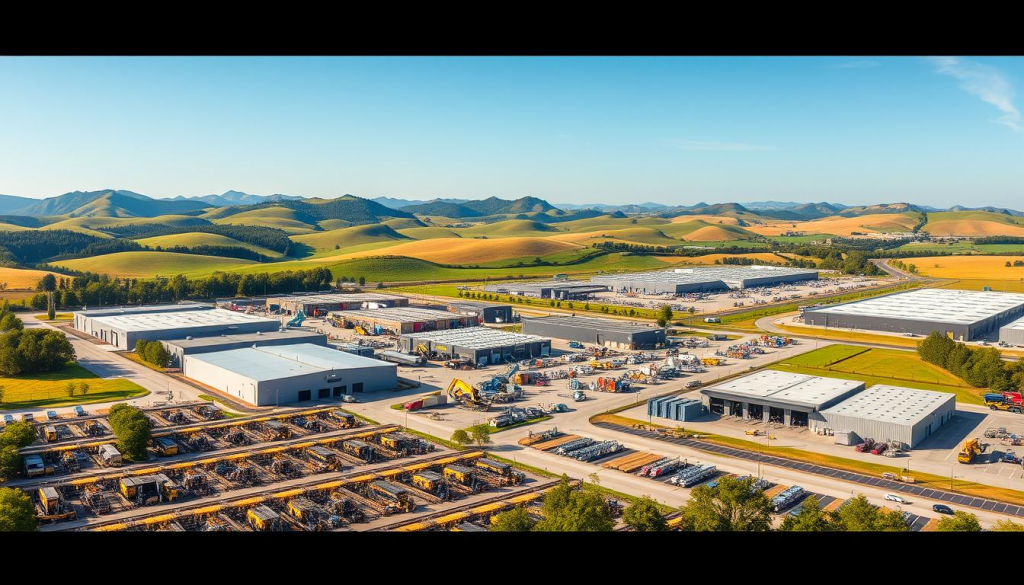
The dewalt power tools factory is not just a production site; it’s a hub of economic activity that benefits the surrounding community.
Partnerships with Local Suppliers
DEWALT fosters strong relationships with local suppliers to support the local economy further. By partnering with local businesses, DEWALT:
- Stimulates local economic growth
- Promotes sustainable practices through its supply chain
- Enhances its manufacturing efficiency
These partnerships are crucial for maintaining the high standards of quality and reliability that DEWALT is known for. They also contribute to the overall economic resilience of the regions where DEWALT operates.
In conclusion, DEWALT’s presence in local economies is multifaceted, involving job creation, local supplier partnerships, and a commitment to economic development. As a result, the brand plays a significant role in the economic well-being of the communities it serves.
Comparison with Competitors
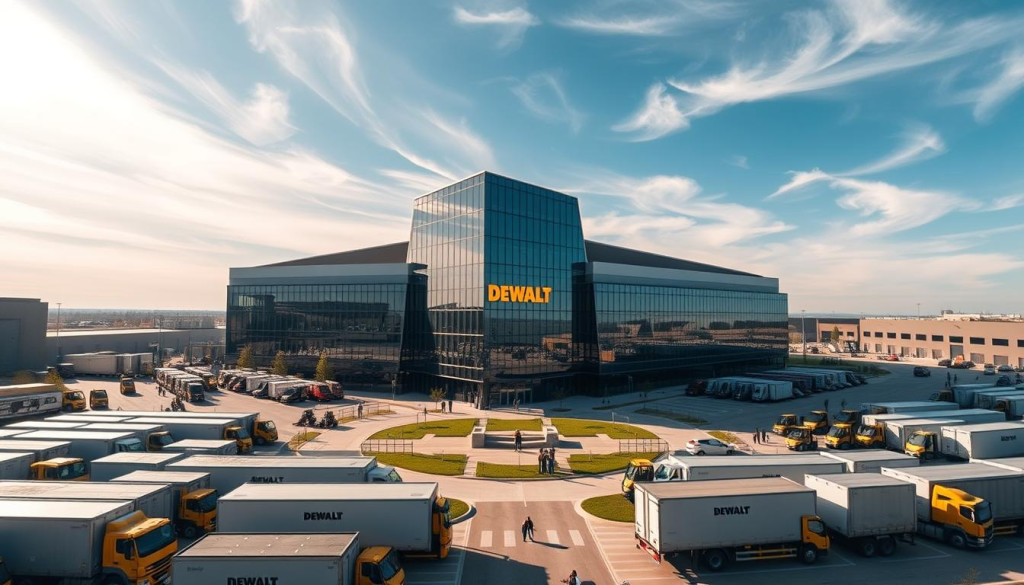
The power tool industry is dominated by a few key players, including DEWALT, Bosch, and Makita, each with its own manufacturing strengths. DEWALT, in particular, has established itself as a leader in the market with its comprehensive range of power tools.
Manufacturing Locations of Rival Brands
While DEWALT is known for its global manufacturing presence, its competitors also have significant operations worldwide. Bosch, for instance, has manufacturing facilities in Germany, China, and the United States, allowing it to cater to a broad customer base. Makita, on the other hand, has a strong presence in Japan and China, with a growing footprint in other regions.
The manufacturing locations of these rival brands play a crucial role in their overall business strategy, influencing factors such as production costs, supply chain efficiency, and product quality.
Pros and Cons of Different Manufacturing Strategies
Different manufacturing strategies have their advantages and disadvantages. For instance, manufacturing in countries with lower labor costs can reduce production expenses but may also lead to longer supply chains and potential quality control issues. On the other hand, producing goods in countries with higher labor costs, like the United States, can result in higher-quality products but at a greater cost.
DEWALT’s strategy of maintaining a global manufacturing footprint allows it to balance these factors, leveraging the benefits of different regions to meet the demands of its global customer base.
Key considerations for manufacturing strategies include:
- Production costs and labor rates
- Supply chain complexity and resilience
- Quality control and product reliability
- Proximity to key markets and customers
By carefully evaluating these factors, DEWALT and its competitors can optimize their manufacturing strategies to achieve a competitive edge in the power tool market.
Consumer Perceptions of Made-in-USA Products
The perception that made-in-USA products are of higher quality drives demand for domestically manufactured power tools. This trend is particularly evident in the power tool industry, where brands like DEWALT have capitalized on the “Made in USA” label to promote their products.
DEWALT’s commitment to manufacturing in the USA has helped to foster a positive brand image, with customers associating the label with high-quality products. As stated by a satisfied customer,
“I prefer DEWALT power tools because they are made in the USA, and I believe they offer superior quality and durability.”
Importance of Domestic Manufacturing
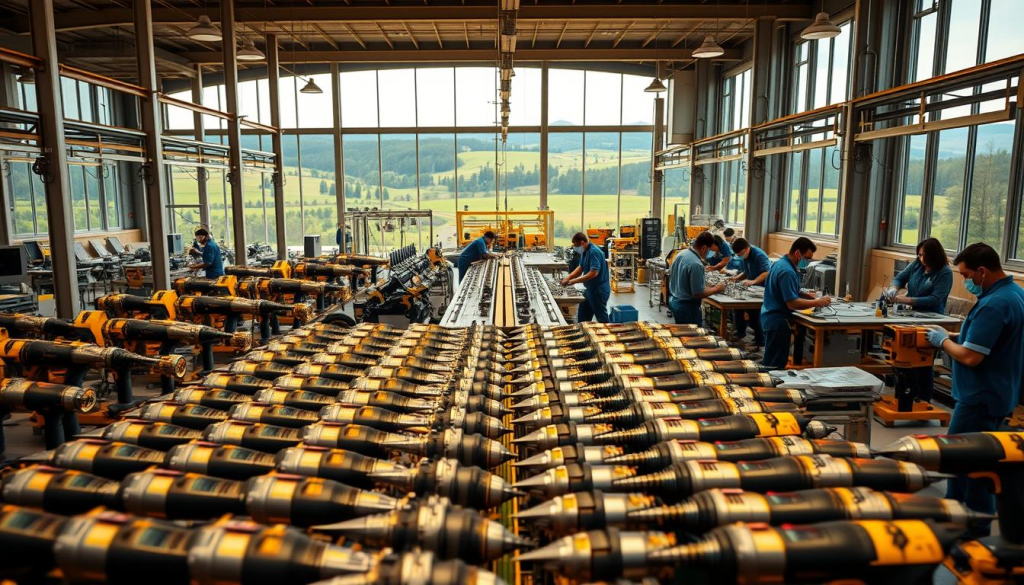
Domestic manufacturing plays a crucial role in shaping consumer perceptions. Many consumers perceive products made in the USA as being of higher quality, which can drive their purchasing decisions. DEWALT’s decision to maintain production facilities in the USA has contributed to its reputation as a premium brand in the power tool market.
The importance of domestic manufacturing is multifaceted. It not only ensures that products meet stringent quality control standards but also supports local economies through job creation and partnerships with local suppliers.
Customer Preferences and Buying Habits
Customer preferences and buying habits are significantly influenced by the country of origin. A survey of power tool users revealed that:
- 75% of respondents considered the country of origin when making a purchasing decision.
- 60% associated made-in-USA products with higher quality.
- 55% were willing to pay a premium for products manufactured in the USA.
These findings underscore the value of the “Made in USA” label for brands like DEWALT. By maintaining a strong presence in domestic manufacturing, DEWALT can continue to capitalize on consumer preferences for high-quality, made-in-USA products.
DEWALT’s Environmental Responsibility
With a growing focus on sustainability, DEWALT has implemented several initiatives to minimize its impact on the environment. As a leading manufacturer of power tools, DEWALT recognizes the importance of reducing its ecological footprint.
Sustainable Manufacturing Practices
DEWALT has adopted sustainable manufacturing practices that prioritize the use of renewable energy sources and waste reduction programs. By integrating eco-friendly technologies into its production processes, DEWALT aims to minimize its environmental impact while maintaining high-quality standards.
The company’s commitment to sustainability is reflected in its efforts to optimize energy consumption and reduce waste generation. DEWALT’s manufacturing facilities are designed to be environmentally responsible, incorporating systems that promote energy efficiency and minimize environmental harm.
Initiatives to Reduce Carbon Footprint
To further reduce its carbon footprint, DEWALT has launched several initiatives focused on energy conservation and sustainable supply chain management. These efforts include the implementation of energy-efficient lighting and HVAC systems in its facilities, as well as the development of a more sustainable logistics network.
DEWALT’s environmental responsibility extends beyond its manufacturing operations to include the design and development of its products. The company is committed to creating products that not only meet customer needs but also adhere to high environmental standards.
By prioritizing sustainability and environmental stewardship, DEWALT is working towards a more eco-friendly future for its customers and the communities it serves.
The Future of DEWALT Power Tools
As DEWALT continues to invest in research and development, the brand is poised to introduce new products and technologies that meet the evolving needs of its customers. With a strong commitment to manufacturing excellence, DEWALT is well-positioned for success in the global market, particularly in its dewalt power tools manufacturing locations.
Emerging Trends and Innovations
DEWALT’s ongoing investments in innovation will drive the development of more efficient, durable, and user-friendly power tools. The brand’s focus on quality and performance will remain a top priority as it explores new manufacturing technologies and strategies.
Global Manufacturing Strategies
While maintaining its presence in existing dewalt power tools manufacturing locations, DEWALT may expand or adjust its global manufacturing footprint to respond to changing market demands and economic conditions. This adaptability will enable the brand to remain competitive and continue delivering high-quality products to its customers.